
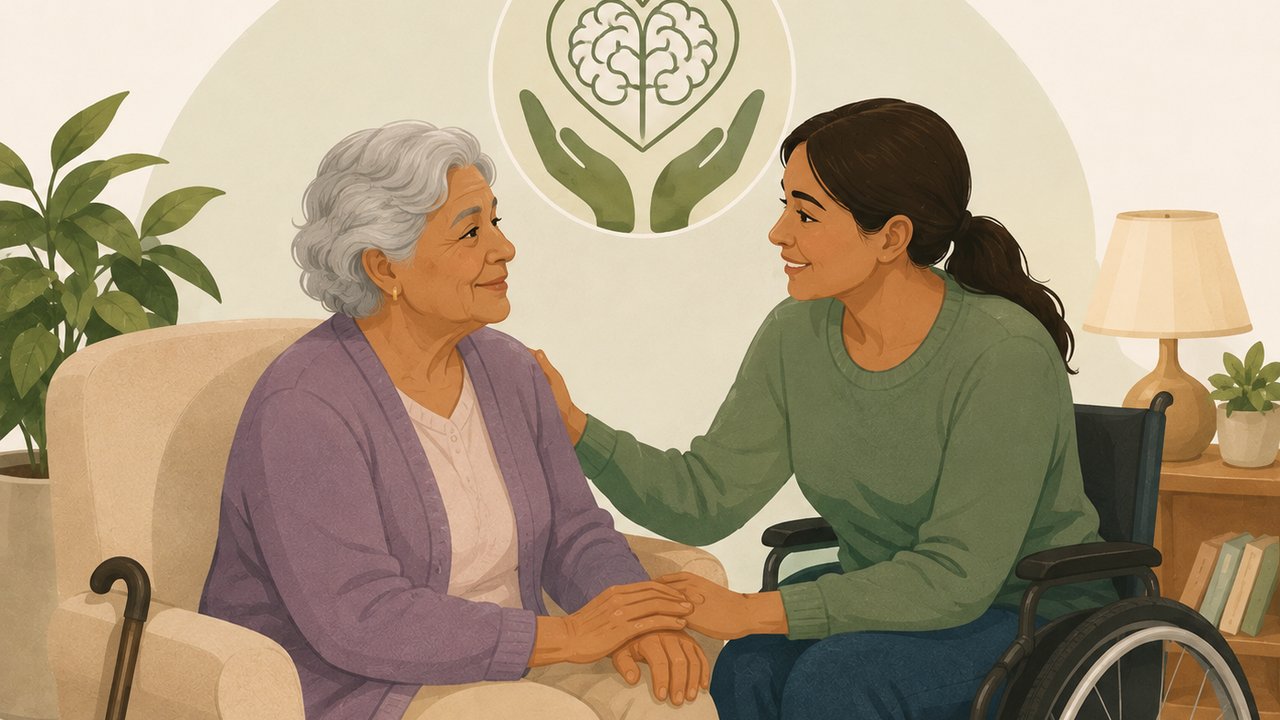
Mental health is a crucial part of overall wellbeing at every age and in every body. Seniors and adults with disabilities often face particular challenges — and they deserve care that is tailored, compassionate, and culturally responsive, treating the whole person rather than a single symptom.
What can weigh on wellbeing
Several things can affect mental health in later life or when living with a disability:
- Chronic pain, arthritis, or limited mobility, which can feed depression and anxiety
- Vision or hearing changes that lead to isolation
- Medication side effects and complex health routines that affect mood and thinking
- Fear of losing independence, which raises stress
- Barriers to getting care — transportation, cost, stigma, or providers who don’t feel accessible
A holistic, inclusive approach
Holistic care looks after mind, body, and spirit together. Alongside therapy, that can include gentle mind-body practices like breathwork and meditation, attention to nutrition and physical health, culturally rooted and traditional healing, spiritual support and mindfulness, creative expression through art or music, and — importantly — staying connected to community. Connection is medicine: isolation is one of the biggest risks, and meaningful engagement is one of the strongest protections.
How loved ones can help
- Be available to listen and offer emotional support
- Share meaningful, enjoyable activities together
- Help connect the person to mental health services and groups
- Encourage healthy habits — nutrition, movement, and rest
- Assist with getting to healthcare and appointments
- Support taking part in inclusive community events
You deserve support
Depression and anxiety are not a normal or unavoidable part of aging or disability — they are treatable, at any age and with any ability. Reaching out is a sign of strength, and the right support can restore comfort, connection, and meaning.