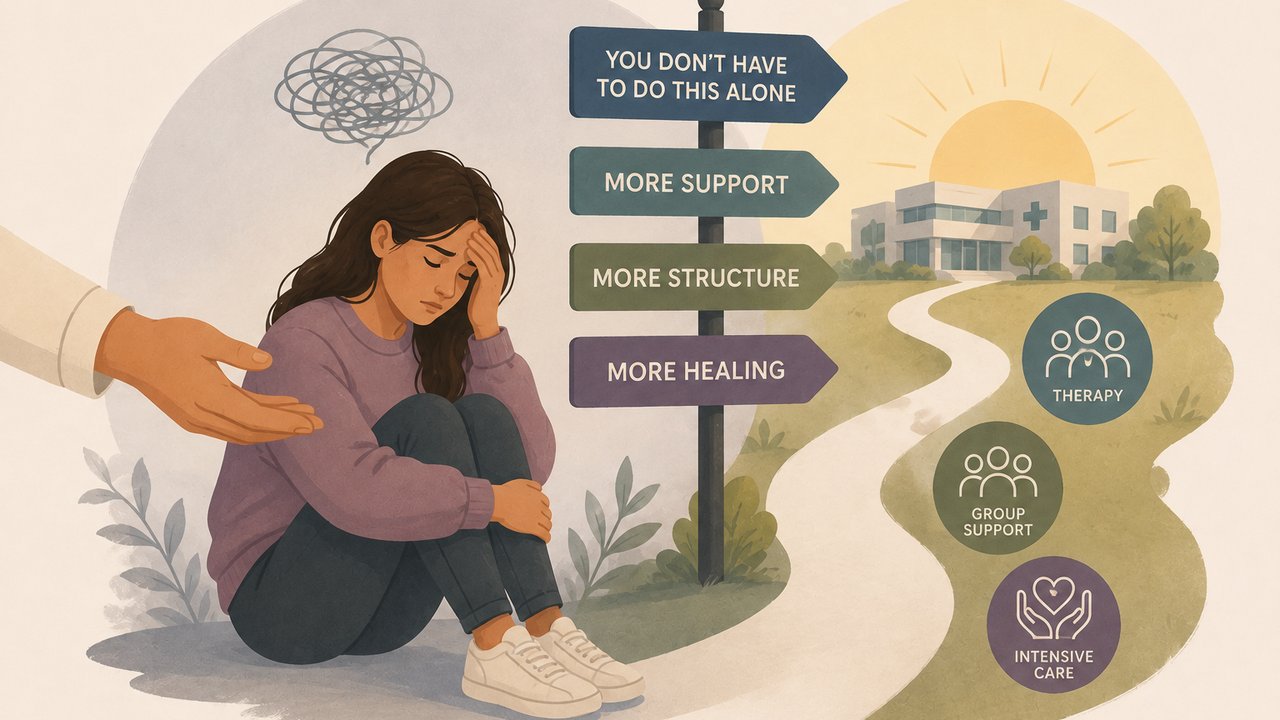
If a therapist has ever suggested that you or someone you love might benefit from a higher level of care, it can land hard. It may feel like being told you are “too much,” too difficult, or that you are being turned away. Please hear this clearly: that is not what it means. Recommending more support is one of the most caring things a clinician can do.
What “a higher level of care” means
Weekly therapy is one level of support, and for many people it is exactly the right fit. But sometimes a situation calls for more structure, more frequent contact, specialized treatment, or medical oversight than once-a-week sessions can provide. A higher level of care can include things like an intensive outpatient program (IOP), a partial hospitalization program (PHP), residential treatment, a program that specializes in a specific condition, or closer coordination with a psychiatric or medical provider. It is simply a different level of support — not a verdict on you.
Why a clinician might recommend it
A recommendation for more care usually comes down to one thing: making sure you have what will actually help. That might be because:
- Your safety would be better supported than weekly sessions allow
- A specific condition would be best served by more intensive or specialized treatment
- You would benefit from more frequent contact, more structure, or a full team of providers
- Medical or psychiatric needs call for closer oversight
These are clinical decisions, made with your wellbeing at the center — not reactions to who you are.
What it does not mean
It does not mean you are too difficult, too much, or a lost cause. It does not mean we do not want to work with you, or that you have failed. Very often it means the opposite: your clinician takes your struggle seriously and cares enough to make sure you get the right level of support — even when, for a season, that support is somewhere else. Referring you toward more care is an act of responsibility and respect, not rejection.
We stay in your corner
Being referred to a higher level of care is rarely a goodbye. We help coordinate the transition, share information with your care team when you consent, and in many cases you can step back down and continue with us when the time is right. You are not being handed off and forgotten — you are being supported toward what you need.
Needing more care is not a weakness or a failure. It is part of healing, and it takes real courage to accept it. You deserve the right support at every step of the way.